
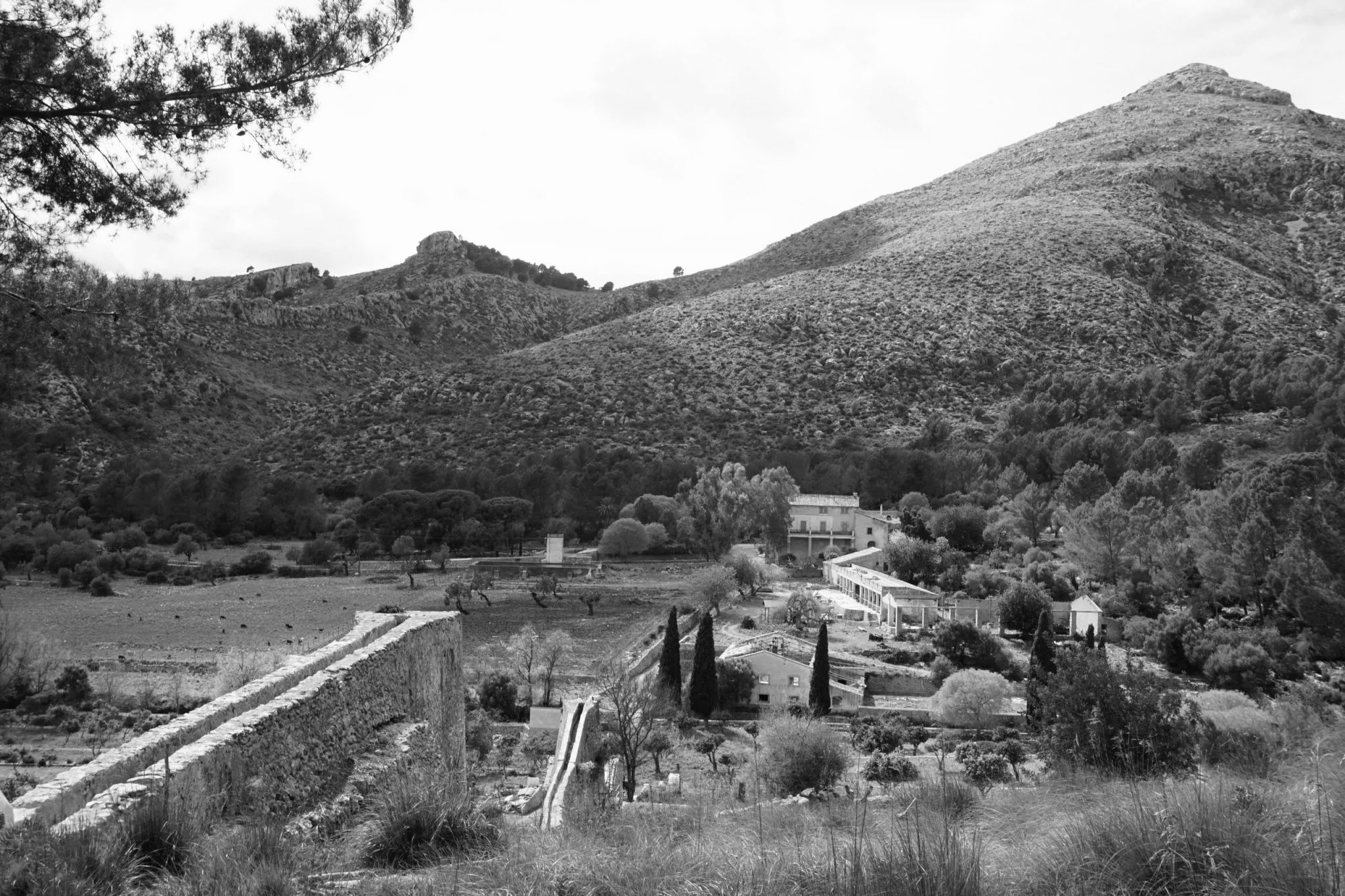
The hidden language of Mallorcan estates: trees, water and symbols of the landscape
Some gardens are designed to be seen. Others seem to have grown around a way of life.
The old Mallorcan possessions belong more to the latter.
Here, vegetation was never completely separate from the house, the land or the work. A tree provided shade, but also food. A safareig stored water, while at the same time bringing coolness and reflections. A grapevine covered a terrace in summer and almost disappeared in winter to let the sunlight through.
Almost everything had a purpose.
And perhaps that is why these landscapes still have such presence.
When we walk through an old possessió today, certain elements appear again and again: lledoners beside the house, olive trees, carob trees, figs, citrus, cypresses, grapevine pergolas, stone walls, courtyards, paths and water systems.
They do not form a secret code in the strict sense. These estates evolved over centuries, and we cannot know exactly what the person planting each tree had in mind.
But we can observe something more interesting: the relationship between landscape and life.
The lledoner: the shade where things happened
The lledoner —the European hackberry, Celtis australis— frequently appears near traditional Mallorcan houses.
It makes sense.
Its canopy creates broad, gentle shade, its flexible wood was traditionally used to make tools and, beyond that, it is a tree capable of accompanying a house for generations.
There are stories of family gatherings and important conversations taking place beneath these trees.
Perhaps some did. Perhaps many.
But even without turning it into a legend, standing beneath a mature lledoner is enough to understand its presence.
It is not simply a tree.
It is a place.
A small space within the landscape where you can sit, talk, work or simply escape the August sun for a while.
Palms: a sign on the horizon
There is something completely different about a palm tree.
It does not create mass. It creates presence.
Its silhouette can be recognised from a distance, rising above the horizontal landscape of almond trees, olives and cultivated fields.
Particularly during the nineteenth and twentieth centuries, palms became increasingly prominent as ornamental trees on many Mediterranean estates. Some possessions used them near houses, entrances or more representative gardens.
That does not mean that a palm automatically announced wealth or nobility.
But it did have something most other trees did not: verticality and distance.
It could mark the presence of a house before the house itself came into view.
And in landscape design, that matters.
The cypress: drawing with vertical lines
The cypress does something similar, although in a much more restrained way.
While other trees spread their branches outward, the cypress pulls the eye upwards.
That is why it works so well along paths, marking entrances or creating rhythm beside architecture.
Mediterranean culture has associated it for centuries with permanence, memory and, in certain contexts, spiritual or funerary spaces.
But reducing the cypress to that symbolism would be too simplistic.
On an estate, it could also simply be living architecture.
A line.
A point.
A vertical pause among much more horizontal masses.
The olive tree: visible time
Few trees explain Mallorca quite like an old olive tree.
Especially in the Serra de Tramuntana, where some specimens seem to have spent centuries negotiating with stone, wind and a lack of soil.
Its importance was economic before it was symbolic.
But it is difficult to look at those twisted trunks without thinking about time.
A mature olive tree does not need to represent roots, continuity or inheritance.
It physically contains them.
And perhaps that is the difference between an invented symbol and one that emerges naturally from the tree itself.
The carob tree: thriving with little
The carob belongs to a different logic.
It does not need great care or particularly generous soil. It withstands drought, heat and difficult conditions.
And it produces.
For generations, its fruit formed part of Mallorca’s rural economy and was widely used as livestock feed.
That is why I find it particularly interesting within the Mediterranean landscape.
It does not try to give the appearance of abundance.
It creates abundance through restraint.
There is something deeply Mediterranean about the idea of prospering without wasting resources.
The fig tree: close to home
The fig tree belongs to a much more domestic scale.
Shade, fresh figs, dried figs and a presence closely connected to everyday life.
It does not need to occupy a ceremonial position.
Its value lies precisely in the opposite.
It is one of those trees around which life simply happens.
Perhaps that is why, more than abundance or hospitality, the fig tree speaks of something much simpler:
home.
The pomegranate: a small excess
The pomegranate has a different energy.
Its flowers, the colour of its fruit and that strange internal architecture filled with seeds have connected it for centuries with ideas of fertility and abundance across different Mediterranean cultures.
In many cases, it was probably planted simply because it produced good fruit.
And there is nothing wrong with that.
Not everything needs to hide a deeper meaning.
Sometimes beauty comes after usefulness.
Orange and lemon trees: when the garden begins to enjoy itself
Citrus introduces something different.
It does not only produce.
It perfumes.
Orange blossom, glossy leaves, brightly coloured fruit and cool shade completely transform the way a space feels.
But citrus needs water.
And that introduces another interesting layer.
In a landscape where water has always been a limited resource, keeping citrus trees near a house required a certain level of hydraulic infrastructure.
The garden began to move slightly away from purely productive land and into the territory of pleasure.
Usefulness and enjoyment began to coexist.
The almond tree: knowing that something is changing
Few moments are as recognisably Mallorcan as almond blossom.
For a few weeks, the landscape changes completely.
But almond trees were not planted to decorate the island.
They were planted because they produced almonds.
The beauty came afterwards.
And I find that particularly interesting.
Because one of Mallorca’s most photographed landscapes was, in fact, born from an agricultural need.
Sometimes a landscape does not need to be designed in order to become beautiful.
It needs time.
The grapevine: architecture that understands the seasons
A grapevine over a terrace is an extraordinarily simple solution.
In summer, when we need shade, it is covered in leaves.
In winter, when we want the sun, it loses them.
And it also produces grapes.
It is difficult to imagine a better example of living architecture.
It needs no technology, mechanisms or instructions.
It simply follows the seasons.
It is one of those old systems that seems more contemporary the more closely you look at it.
Water: perhaps the real luxury
To understand many Mallorcan gardens, we need to stop looking at the plants for a moment and look at the water.
Safareigs.
Cisterns.
Wells.
Irrigation channels.
Watercourses.
On an island where rainfall is irregular, collecting, storing and distributing water was not an aesthetic question.
It was survival.
The safareig that we may now see as a beautiful garden feature was, first and foremost, infrastructure.
The reflections, coolness, sound and beauty came afterwards.
But first there was water.
And perhaps here we find one of the true symbols of wealth in the traditional Mallorcan landscape:
being able to have access to it.
The clastra, stone and the experience of arrival
The landscape of a possessió cannot be understood by looking only at its trees.
It is built through relationships.
The clastra connects the house with the activity taking place around it.
Dry-stone walls retain soil, shape terraces and organise the land.
Paths prepare the arrival.
Trees accompany certain routes and conceal others.
Architecture does not end where the walls of the house end.
It continues outside.
In a patch of shade.
In an alignment.
In a change of level.
In the way we slowly approach a place.
What can we learn from all this?
Perhaps the mistake when designing a Mallorcan garden today is trying to make it look Mallorcan.
An olive tree here.
Some lavender there.
An old stone.
Two cypresses.
And then waiting for identity to appear.
It does not work like that.
The real lesson of these landscapes lies beneath their appearance.
It lies in understanding why everything is where it is.
Create shade where we are going to sit.
Store water where it will be needed.
Use vegetation capable of living with the climate.
Let the winter sun through.
Create a place to gather.
Mark an arrival.
Protect against the wind.
Introduce scent, food, shade or silence.
That is what made these landscapes work.
And it is probably also what can give a contemporary garden in Mallorca a real sense of identity without having to imitate the past.
Because a Mediterranean garden should not be built by accumulating symbols.
It should grow from understanding the place.
And perhaps true luxury is still exactly what it was centuries ago:
that every tree has a reason to be exactly where it is.
Sumo Detalle.
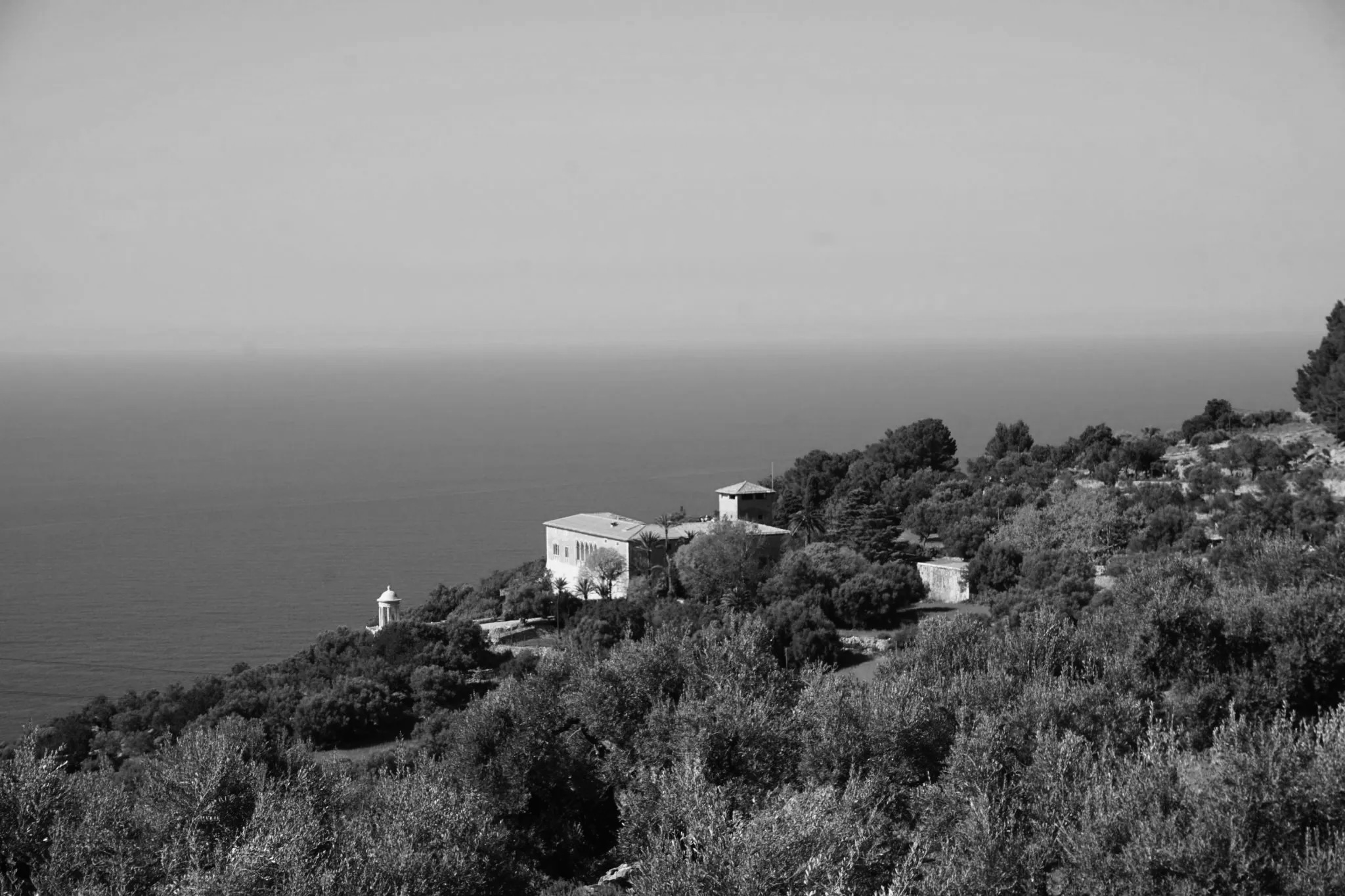
El lenguaje oculto de las possessions mallorquinas: árboles, agua y símbolos del paisaje
Hay jardines que se diseñan para ser vistos. Otros parecen haber crecido alrededor de una forma de vivir.
Las antiguas possessions mallorquinas pertenecen más bien a estos últimos.
Aquí la vegetación nunca estuvo completamente separada de la casa, del campo o del trabajo. Un árbol daba sombra, pero también alimento. Un safareig almacenaba agua, pero al mismo tiempo introducía frescor y reflejos. Una parra cubría una terraza en verano y desaparecía prácticamente en invierno para dejar entrar el sol.
Nada estaba demasiado lejos de una función.
Y quizá por eso estos paisajes siguen teniendo tanta fuerza.
Cuando recorremos hoy una possessió antigua aparecen elementos que se repiten: lledoners junto a las casas, olivos, algarrobos, higueras, cítricos, cipreses, emparrados, muros de piedra, patios, caminos y sistemas de agua.
No forman un código secreto en sentido estricto. Las fincas cambiaron durante siglos y no podemos saber qué pensaba exactamente quien plantó cada árbol.
Pero sí podemos observar algo más interesante: la relación que existía entre paisaje y vida.
El lledoner: la sombra bajo la que ocurrían cosas
El lledoner —el almez, Celtis australis— aparece con frecuencia cerca de las casas rurales mallorquinas.
Tiene sentido.
Su copa crea una sombra amplia y amable, su madera se utilizaba tradicionalmente para fabricar herramientas y, además, es un árbol capaz de acompañar a una casa durante generaciones.
Hay relatos que hablan de reuniones familiares y conversaciones importantes bajo estos árboles.
Quizá algunas ocurrieron. Quizá muchas.
Pero incluso sin convertirlo en una leyenda, basta colocarse debajo de un lledoner adulto para entender su presencia.
No es solo un árbol.
Es un lugar.
Un pequeño espacio dentro del paisaje donde uno puede sentarse, hablar, trabajar o simplemente escapar durante un rato del sol de agosto.
Las palmeras: una señal en el horizonte
Hay algo completamente diferente en una palmera.
No crea masa. Crea presencia.
Su silueta se reconoce desde lejos y sobresale por encima del paisaje horizontal de almendros, olivos y cultivos.
Especialmente durante los siglos XIX y XX, las palmeras comenzaron a tener una fuerte presencia ornamental en muchas fincas mediterráneas. Algunas possessions las utilizaron junto a las casas, accesos o jardines más representativos.
No significa que una palmera anunciara automáticamente riqueza o nobleza.
Pero sí tenía algo que el resto de árboles no tenía: verticalidad y distancia.
Era capaz de señalar una casa antes incluso de verla.
Y en paisaje, eso importa.
El ciprés: dibujar con verticales
El ciprés hace algo parecido, aunque de una manera mucho más contenida.
Mientras otros árboles extienden sus ramas, él concentra la mirada hacia arriba.
Por eso funciona tan bien acompañando caminos, marcando entradas o creando ritmo junto a una arquitectura.
La cultura mediterránea lo ha relacionado durante siglos con la permanencia, la memoria y también con determinados espacios espirituales o funerarios.
Pero reducir el ciprés a ese simbolismo sería quedarse corto.
En una finca también podía ser simplemente arquitectura vegetal.
Una línea.
Un punto.
Una pausa vertical entre masas mucho más horizontales.
El olivo: el tiempo visible
Pocos árboles explican Mallorca como un olivo viejo.
Especialmente en la Serra de Tramuntana, donde algunos ejemplares parecen haber negociado durante siglos con la piedra, el viento y la falta de suelo.
Su importancia fue económica antes que simbólica.
Pero resulta difícil observar esos troncos retorcidos sin pensar en el tiempo.
Un olivo adulto no necesita representar las raíces, la continuidad o la herencia.
Las contiene físicamente.
Y posiblemente ahí esté la diferencia entre un símbolo inventado y uno que nace de la propia naturaleza del árbol.
El algarrobo: prosperar con poco
El algarrobo pertenece a otra lógica.
No necesita grandes cuidados ni terrenos especialmente generosos. Aguanta sequía, calor y suelos difíciles.
Y produce.
Durante generaciones sus frutos formaron parte de la economía rural mallorquina y de la alimentación del ganado.
Por eso me interesa especialmente dentro del paisaje mediterráneo.
No intenta aparentar abundancia.
La construye desde la austeridad.
Hay algo profundamente mediterráneo en esa idea de prosperar sin desperdiciar recursos.
La higuera: cerca de casa
La higuera pertenece a una escala mucho más doméstica.
Sombra, higos frescos, higos secos y una presencia que normalmente sentimos cercana a la vida cotidiana.
No necesita ocupar una posición ceremonial.
Precisamente su valor está en lo contrario.
Es uno de esos árboles alrededor de los cuales la vida simplemente sucede.
Quizá por eso, más que representar la abundancia o la hospitalidad, la higuera nos habla de algo mucho más sencillo:
hogar.
El granado: un pequeño exceso
El granado tiene otra energía.
Su floración, el color del fruto y esa extraña arquitectura interior llena de semillas lo han conectado durante siglos con ideas de fertilidad y abundancia en distintas culturas mediterráneas.
Probablemente muchas veces se plantó sencillamente porque daba buenos frutos.
Y está bien que sea así.
No todo necesita esconder un significado profundo.
A veces la belleza aparece después de la utilidad.
Naranjos y limoneros: cuando el jardín empieza a disfrutar
Los cítricos introducen algo distinto.
No solo producen.
Perfuman.
La flor de azahar, el brillo de las hojas, el color del fruto y la sombra fresca transforman completamente la percepción de un espacio.
Pero necesitan agua.
Y ahí aparece otra lectura interesante.
En un paisaje donde el agua siempre ha sido un recurso limitado, mantener cítricos cerca de una casa implicaba disponer de una cierta infraestructura hidráulica.
El jardín comenzaba a separarse ligeramente del territorio puramente productivo y entraba en el terreno del placer.
Utilidad y disfrute empezaban a convivir.
El almendro: saber que algo está cambiando
Hay pocos momentos tan reconocibles en Mallorca como la floración de los almendros.
Durante unas semanas el paisaje se transforma.
Pero el almendro no apareció para decorar la isla.
Apareció porque producía almendras.
La belleza vino después.
Y eso me parece especialmente interesante.
Porque uno de los paisajes más fotografiados de Mallorca nació, en realidad, de una necesidad agrícola.
A veces el paisaje no necesita ser diseñado para convertirse en hermoso.
Necesita tiempo.
La vid: una arquitectura que entiende las estaciones
Una parra sobre una terraza es una solución extraordinariamente sencilla.
En verano, cuando necesitamos sombra, está cubierta de hojas.
En invierno, cuando buscamos el sol, las pierde.
Y además produce uvas.
Cuesta imaginar un ejemplo mejor de arquitectura vegetal.
No necesita tecnología, mecanismos ni instrucciones.
Simplemente sigue las estaciones.
Es uno de esos sistemas antiguos que, cuanto más los observamos, más contemporáneos parecen.
El agua: probablemente el verdadero lujo
Para entender muchos jardines mallorquines hay que dejar de mirar las plantas durante un momento y mirar el agua.
Safareigs.
Aljibes.
Pozos.
Acequias.
Canales.
En una isla donde la lluvia es irregular, captar, almacenar y distribuir agua no era una cuestión estética.
Era supervivencia.
El safareig que hoy podemos percibir como un elemento precioso del jardín era, antes que nada, una infraestructura.
Después llegaron los reflejos, el frescor, el sonido y la belleza.
Pero primero estaba el agua.
Y quizá ahí aparezca uno de los verdaderos símbolos de riqueza del paisaje tradicional mallorquín:
poder disponer de ella.
La clastra, la piedra y la llegada
El paisaje de una possessió tampoco se entiende mirando únicamente sus árboles.
Está construido mediante relaciones.
La clastra conecta la casa con la actividad que ocurre alrededor.
Los muros de piedra seca contienen tierras, dibujan terrazas y ordenan el territorio.
Los caminos preparan la llegada.
Los árboles acompañan algunos recorridos y esconden otros.
La arquitectura no termina donde acaba el muro de la casa.
Continúa fuera.
En una sombra.
En una alineación.
En un cambio de nivel.
En la manera en la que uno se aproxima lentamente a un lugar.
Lo que podemos aprender de todo esto
Quizá el error al diseñar hoy un jardín mallorquín sea intentar parecer mallorquín.
Poner un olivo aquí.
Unas lavandas allí.
Una piedra antigua.
Dos cipreses.
Y esperar que aparezca la identidad.
No funciona así.
La verdadera enseñanza de estos paisajes está debajo de su estética.
Está en entender por qué cada cosa está donde está.
Crear sombra donde vamos a sentarnos.
Guardar agua donde será necesaria.
Utilizar vegetación capaz de vivir con el clima.
Dejar pasar el sol en invierno.
Crear un lugar donde reunirse.
Marcar una llegada.
Protegerse del viento.
Introducir aroma, alimento, sombra o silencio.
Eso es lo que hacía que estos paisajes funcionaran.
Y probablemente también sea lo que puede hacer que un jardín contemporáneo en Mallorca tenga identidad sin necesidad de imitar el pasado.
Porque un jardín mediterráneo no debería construirse acumulando símbolos.
Debería surgir de entender el lugar.
Y quizá el verdadero lujo siga siendo exactamente el mismo que hace siglos:
que cada árbol tenga una razón para estar donde está.
Sumo Detalle.